Choosing Industrial Strength Aluminum Foil requires more than comparing thickness and price. The correct grade must match heat, pressure, moisture, corrosion, and forming demands. A foil roll may look strong, yet tiny pinholes can weaken performance during production. That detail is easy to miss.
The International Aluminium Institute reported global primary aluminium production at about 70 million tonnes in 2023. This scale supports a broad foil supply chain, but it also creates quality differences. The U.S. Geological Survey identifies packaging, transportation, construction, and electrical uses as major aluminium applications. These sectors require different alloy, temper, and surface controls. Tom Dobbins, former president and chief executive of The Aluminum Association, has said, “Aluminum is a material of choice for a sustainable future.” The statement is useful, but sustainability alone cannot select your foil.
Buyers should examine alloy composition, nominal thickness, tensile strength, elongation, temper, roll width, and surface finish. For thermal applications, confirm temperature limits and heat-transfer behavior. For packaging, test barrier performance, seal compatibility, and pinhole frequency. ASTM standards and supplier certificates can improve traceability. Independent laboratory testing is better for critical applications.
Still, specifications can mislead. A thicker foil is not automatically the best foil. Excess thickness may increase waste, weight, and forming difficulty. A cheaper roll may also produce more rejects. This guide explains how to compare Industrial Strength Aluminum Foil through measurable performance, supplier evidence, and real operating conditions. Some decisions remain judgment calls. That is where careful trials matter.
Define Industrial-Strength Aluminum Foil and Its Core Properties
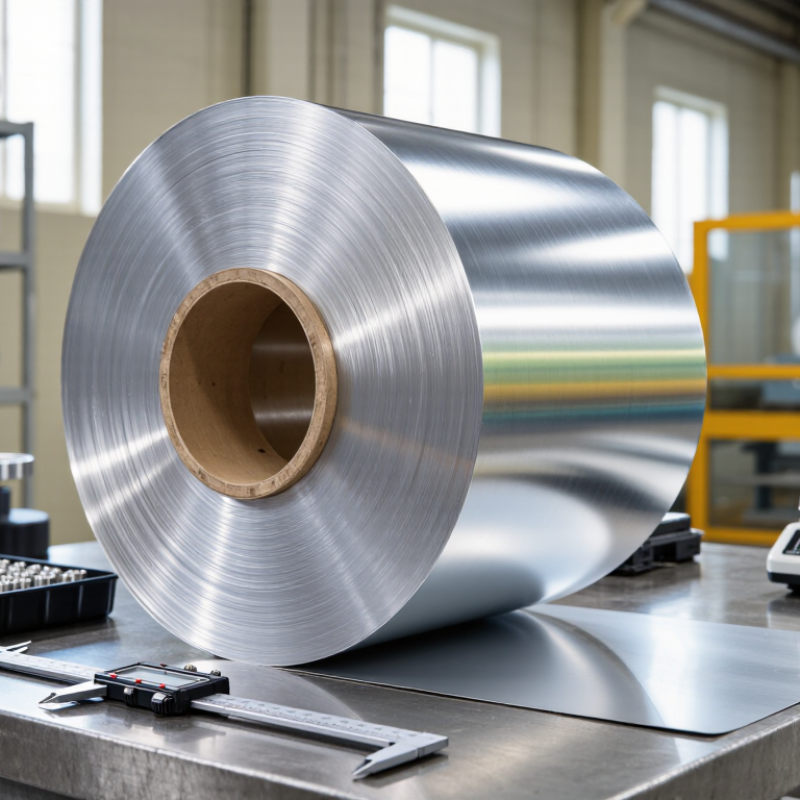
Industrial-strength aluminum foil is engineered for demanding industrial tasks, not ordinary kitchen wrapping. The term is not perfectly standardized. It usually describes foil with greater thickness, controlled alloy composition, and improved resistance to tearing, puncturing, heat, or chemical exposure. A thicker sheet is not automatically stronger.
Core properties begin with thickness and temper. Heavy-gauge foil may resist damage during forming, insulation installation, or equipment wrapping. Tensile strength shows how much pulling force the foil can withstand. Puncture resistance matters when sharp edges or repeated handling are expected. A reliable barrier also limits moisture, light, oxygen, and heat transfer. Surface cleanliness and consistent coating adhesion can be equally important.
In practical purchasing, I inspect the technical data sheet before judging performance. I compare thickness tolerance, elongation, tensile results, and test conditions. Alloy selection also affects flexibility and strength. Hard-temper foil often holds its shape better, while soft-temper foil bends around corners more easily. This trade-off is easy to overlook. I have seen thicker foil fail at a folded edge because the material lacked suitable flexibility. Sample testing under real temperatures, loads, and handling conditions is wiser than relying on thickness alone. Supplier quality records, batch traceability, and independent test reports provide stronger evidence than broad marketing terms.
How to Choose Industrial-Strength Aluminum Foil?
Industrial-strength aluminum foil is foil selected for demanding applications where thickness, tear resistance, barrier performance, and dimensional stability are more important than household convenience. It is commonly evaluated by alloy, temper, thickness, tensile strength, elongation, and surface condition.
The chart shows representative industrial foil thicknesses and the corresponding areal mass calculated using aluminum’s approximate density of 2.70 g/cm³. Increasing thickness generally improves puncture and tear resistance, while the alloy and temper determine the final strength and flexibility. Always verify tensile and elongation requirements against the applicable material specification before selection.
Identify the Required Foil Thickness, Width, and Length
Industrial-strength aluminum foil starts with accurate dimensions, not a vague description such as “heavy duty.” European Aluminium classifies foil as rolled aluminum below 0.2 millimeters, or 200 microns. Thickness should match the real load, forming pressure, temperature, and barrier requirement. For demanding wrapping or insulation, 50–100 microns may provide better tear resistance than household-grade foil. ASTM B479 also emphasizes thickness, temper, surface condition, and pinhole control for industrial foil applications.
Width must fit the equipment and the covered surface. Measure the usable width, then allow a small margin for edge trimming. A roll that is 1,000 millimeters wide may be unsuitable if the machine accepts only 950 millimeters. Length depends on both production speed and roll weight.
The practical calculation is simple: mass in kilograms is approximately 2.7 × thickness in millimeters × width in meters × length in meters. A 0.1-millimeter foil, 1 meter wide, and 500 meters long weighs about 135 kilograms before the core and packaging.
Check the core diameter, outside roll diameter, and winding direction, too. These details are easy to overlook. International Aluminium Institute production data shows aluminum remains a major industrial material, but foil selection still depends on application-specific engineering. I would request a trial roll before ordering a full batch. Calculations can be correct, yet handling may still feel wrong.
Match Alloy Selection to Strength, Flexibility, and Forming Needs
Choosing industrial-strength aluminum foil starts with the job, not the thickness chart. Alloy selection affects load capacity, flexibility, and forming behavior. Higher-strength alloys suit covers, shields, and parts exposed to vibration. They may resist shaping, however, especially around tight corners. Softer alloys stretch more easily and support deep pockets, folded channels, or wrapped insulation. This flexibility can reduce cracking during production. It may also lower resistance to dents and tearing. In plant trials, I check the finished geometry, not only tensile strength. A foil that looks strong on paper may split after repeated bending. Temperature, temper, and thickness also change performance. These details are easy to overlook.
Tips: Compare yield strength, elongation, and forming radius using verified technical data. Request samples in the target temper. Run bend tests at production speed. Watch for edge cracks, pinholes, and springback. If the foil faces heat, moisture, or chemicals, test it under realistic conditions. A simple hand fold helps, but it cannot replace measured trials. I have seen a slightly softer alloy outperform a stronger grade because it formed cleanly with less scrap. That result may feel counterintuitive. Recheck it.
Evaluate Heat Resistance, Barrier Performance, and Surface Finish
Choosing industrial-strength aluminum foil starts with the actual thermal cycle, not thickness alone. In production trials, record peak temperature, heating time, cooling rate, and contact conditions. Foil near a heated mold may face uneven hotspots. Laboratory ratings can look impressive, yet factory handling may reveal weak points. Test it.
Heat resistance should be judged beside barrier performance. High temperatures can expand pinholes or weaken seals, especially when foil meets moisture, oils, or acidic materials. Request data on oxygen transmission, water vapor transmission, tensile strength, and seal integrity. A thicker gauge often improves protection, but it cannot automatically prevent leakage. Measure performance after forming, bending, and repeated handling. That step is easy to skip. It should not be.
Surface finish affects more than appearance. A clean, uniform surface supports printing, coating, heat transfer, and consistent release from tooling. Matte foil can reduce inspection glare, while bright foil may reflect heat and light differently. Check roughness, cleanliness, scratches, and rolling marks under production lighting. Compare samples after storage and temperature cycling. My earlier evaluations focused too heavily on initial appearance. That was a useful mistake. Choose foil that matches the process, not merely a catalog description.
How to Choose Industrial Strength Aluminum Foil? - Evaluate Heat Resistance, Barrier Performance, and Surface Finish
| Typical foil thickness |
Approx. basis weight |
Mechanical suitability |
Heat considerations |
Barrier performance |
Surface and typical uses |
| 25 μm (0.025 mm) |
≈67.5 g/m² |
Suitable for flexible wrapping and light-duty conversion; more susceptible to tearing or pinholes than thicker foil. |
Aluminum conducts heat quickly. Check the full assembly and process conditions, especially when foil is laminated, coated, or in contact with other materials. |
Provides an effective light, moisture, and gas barrier when the foil is continuous and free of pinholes; handling and flexing can affect performance. |
Usually supplied with one bright and one matte side. Common in flexible packaging and converted laminates. |
| 40 μm (0.040 mm) |
≈108 g/m² |
A practical middle range for applications needing more handling strength than thin packaging foil; performance also depends on alloy and temper. |
The foil itself has a melting point of about 660°C, but this is not a recommended service temperature. Set operating limits based on the application, exposure time, and any coatings or bonded layers. |
Thicker foil generally offers greater resistance to damage that could create barrier defects; verify the finished product rather than relying on thickness alone. |
Bright and matte faces are typical results of rolling. Used in heavier flexible packaging, insulation facings, and industrial laminates. |
| 50 μm (0.050 mm) |
≈135 g/m² |
Better suited to demanding handling and fabrication than thinner gauges; assess forming, bending, and puncture requirements using application-specific tests. |
Suitable temperature limits depend on the complete design. High temperatures can affect surface condition and the performance of coatings, adhesives, or adjacent materials. |
A robust option where barrier continuity and durability are priorities, provided the foil remains undamaged during conversion and use. |
Choose bright, matte, or specified surface condition to suit appearance, bonding, or fabrication needs. Often used in industrial facings and heavy-duty converted products. |
| 75 μm (0.075 mm) |
≈202.5 g/m² |
A heavy-gauge choice for applications requiring a more substantial foil section; forming and joining methods should be checked for the selected alloy and temper. |
Do not use the melting point as a working-temperature rating. Confirm temperature limits through testing under the actual heating cycle and service environment. |
Greater thickness can improve resistance to handling damage, but seams, edges, folds, and any pinholes remain important barrier considerations. |
Surface finish should be specified by functional need; appearance alone does not establish barrier or thermal performance. Used for heavy-duty industrial conversion. |
Basis weights are approximate, calculated using an aluminum density of 2.70 g/cm³. Actual properties vary with alloy, temper, manufacturing tolerances, surface treatment, and finished-product construction. Validate barrier and temperature performance under intended use conditions.
Compare Supplier Quality, Compliance, Packaging, and Total Cost
How to Choose Industrial Strength Aluminum Foil?
Choosing industrial-strength aluminum foil starts with supplier evidence, not a polished brochure. Ask for alloy, temper, thickness tolerance, tensile data, and recent batch records. Request samples from normal production, not specially selected rolls. Check the foil under angled light for pinholes, wrinkles, oil marks, and uneven edges. In my experience, small defects become expensive during slitting or forming. Ask for lot traceability and a clear process for handling nonconforming material. Do not guess.
Compliance depends on the end use and destination. Confirm applicable standards, restricted-substance declarations, and food-contact documentation when relevant. A credible supplier should explain testing methods, certificate scope, and renewal dates. Verify that certificates match the actual alloy, temper, coating, and production site. This detail is often missed. If a supplier avoids technical questions, treat that as a quality signal. However, paperwork alone proves little. Independent testing may be sensible for critical applications.
Packaging protects value after production. Look for moisture-resistant wrapping, firm cores, edge guards, stable pallets, and labels showing lot, width, thickness, weight, and handling limits. Compare total cost, not just price per kilogram. Include freight, minimum order quantities, inspection, yield loss, storage, repacking, and downtime from defects. A cheaper roll can cost more when it jams equipment or arrives damaged. Request a landed-cost comparison using your real monthly volume. I would also test one shipment before signing a long agreement. That sounds slower. It can prevent a costly assumption.
Conclusion
Choosing the right Industrial Strength Aluminum Foil begins with understanding its intended use and core properties, including tensile strength, durability, corrosion resistance, and resistance to tearing. Start by defining the required thickness, width, and roll length according to the application, equipment limitations, and handling requirements. Thicker foil generally provides greater strength and protection, while thinner grades may offer improved flexibility and cost efficiency.
Alloy selection should reflect the balance between strength, flexibility, and forming performance needed for fabrication or installation. It is also important to evaluate heat resistance, moisture and light barrier performance, and surface finish, especially when the foil will be exposed to demanding environments. Finally, compare suppliers based on quality consistency, technical documentation, regulatory compliance, packaging security, delivery reliability, and total cost rather than unit price alone. A complete evaluation helps ensure the selected foil performs reliably while supporting efficient processing and long-term value.

